
Nearshore software development: what actually makes it work
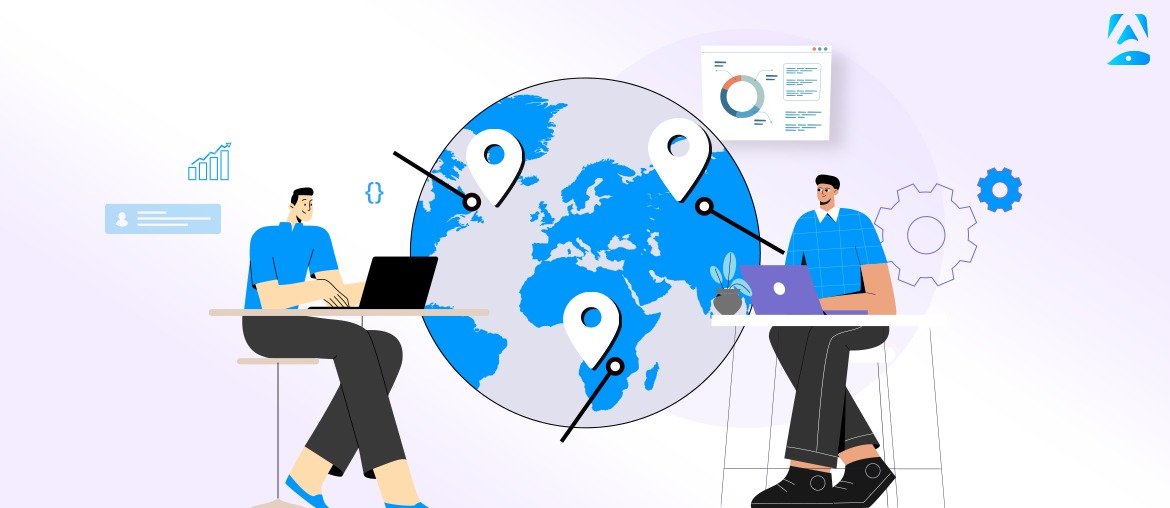
Nearshore delivery has become the default answer for companies that want more engineering capacity without the friction of a twelve-hour time difference. The pitch is familiar: senior talent, overlapping hours, cultural fit, and a cost that sits between local hiring and offshore outsourcing. The reality is more specific. Nearshore works when the engagement is designed around ownership, communication, and measurable delivery. It fails when it is treated as a cheaper way to fill seats.
That is the bet behind FusionHit nearshore software development: teams that work in the same or adjacent time zones, communicate in real time, and integrate with the client’s product and engineering culture. The geography helps, but it is not the product. The product is a delivery model that reduces the cost of misunderstanding.
The first question is not where the team sits. It is what the team owns. A nearshore group can extend an existing squad, own a workstream, or take responsibility for a product area. Each model requires a different management structure. The engagement model decides who owns the outcome, and confusing capacity with ownership is the most common source of disappointment.
A staff augmentation arrangement adds people to a team the client already manages. It works when the client has strong technical leadership and a clear backlog. A dedicated team works when the partner can own delivery and the client can own priorities. A fixed-scope project works when the requirements are stable and the risk is understood. None of these is universally better, but they are not interchangeable.
What nearshore really buys you
The obvious benefit is time-zone overlap. A question asked in the morning can be answered the same day, and a decision can be made in a meeting instead of a thread. That sounds minor until a project is blocked for three days waiting for a reply. Time-zone overlap is a communication feature, not a perk, and it changes the pace of iteration.
The second benefit is cultural and linguistic proximity. It reduces the translation layer that slows offshore projects, especially in product discovery and user-facing work. It does not eliminate differences, and it does not guarantee quality. It simply makes the conversations shorter and the feedback loops tighter.
The third benefit is access to talent that is hard to hire locally. Nearshore partners can staff a team in weeks rather than months, and they can scale up or down with the roadmap. That flexibility is valuable, but it comes with a responsibility: the client must onboard the team properly and give it enough context to make good decisions.
Nearshore is not offshore with a shorter flight. It is a different operating model, with different costs and different expectations. Nearshore is not offshore with a shorter flight, and a partner that sells it as the cheapest option is probably optimizing for the wrong thing.
How to make the partnership work
Start with a clear problem and a measurable outcome. A team that knows what success looks like can make tradeoffs; a team that only receives tickets cannot. Define the product owner, the decision-making process, and the escalation path before the first sprint. A partner without a delivery rhythm becomes a ticket queue, and a ticket queue is expensive.
Onboard deliberately. The first two weeks should include architecture walkthroughs, access to systems, introductions to stakeholders, and a small deliverable that proves the team can ship. A partner who waits for perfect documentation will wait forever. The client should provide enough context to start and enough feedback to improve.
Agree on communication norms. Daily standups, weekly demos, written decisions, and a shared backlog are not bureaucracy; they are the interface between two organizations. The best teams make the work visible without requiring a status meeting for every question. A reliable partner is predictable, and predictability is built through small rituals.
Review security and intellectual property early. Who owns the code, the designs, the infrastructure, and the data? Where does the work happen, who can access production, and how are credentials managed? A contract that is vague on ownership creates a problem at the worst possible moment. The same applies to background checks, device policies, and incident response.
Define metrics that matter. Delivery predictability, cycle time, escaped defects, and the percentage of work that reaches production are better indicators than hours logged. A team that ships small increments every week is easier to manage than a team that disappears for a month and returns with a big-bang release.
Watch for the warning signs. High turnover on the account, decisions that require the partner’s founder, estimates that never change, and a team that cannot explain the product beyond its tickets. A partner who cannot describe the user is not close enough to the product, and distance from the user is the real risk in any outsourcing model.
The commercial model should match the risk. Hourly billing rewards time, fixed price rewards scope cutting, and a retainer rewards continuity. The right choice depends on how well the work is understood and how much change is expected. Review the model at least once a year; what worked at the start may not fit the next stage.
Nearshore development is a long relationship, not a transaction. The first ninety days set the tone: the team learns the product, the client learns how the team works, and both decide whether the fit is real. Invest in that period, measure it honestly, and adjust before scaling. The geography gets you in the room. The operating model is what keeps the work moving.
